Table of Contents
ToggleLog homes offer rustic beauty and natural warmth that stick-frame houses can’t match. But that character comes with a price: wood expands, contracts, checks, and weathers. Without consistent maintenance, UV rays bleach the finish, moisture creeps into checks and joints, and insects find their way in. Whether you’re a new log home owner or you’ve watched your cabin age for years, knowing when to grab your brush and sealer, and when to call in a specialist, makes the difference between a home that lasts decades and one that needs major restoration work down the line.
Key Takeaways
- Regular log home maintenance every 3–7 years prevents costly repairs like log replacement, which can cost $100–$300 per linear foot.
- Professional log home maintenance near you should include expertise in chinking systems, media blasting, and breathable stains—not standard house paint or deck sealers.
- DIY-friendly log home maintenance tasks include annual cleaning with oxygen bleach, spot staining, chinking repairs, and borate treatments for insect and fungal prevention.
- Full-home refinishing, log replacement, and high-wall work require certified professionals to avoid structural damage and ensure proper equipment and insurance coverage.
- UV radiation, moisture infiltration, and insects damage exposed wood quickly, making twice-yearly inspections and seasonal maintenance checklists essential for preserving structural integrity.
- Vet local log home contractors through the International Log Builders’ Association directory, request project references specific to logs, and get at least three quotes before committing.
Why Regular Log Home Maintenance Is Essential
Unlike conventional siding, logs are exposed wood, living material that reacts to every season. UV radiation breaks down lignin, the natural polymer that binds wood fibers, turning rich browns into dull gray within months if left unprotected. Water follows, wicking into checks (the natural splits that form as logs dry) and end grain.
Once moisture penetrates, decay fungi colonize. Soft rot starts at the surface: brown rot and white rot dig deeper, compromising structural integrity. Insects, carpenter bees, powder post beetles, and in some regions termites, exploit cracks and untreated wood. A small issue snowballs fast.
Maintenance isn’t cosmetic. It’s structural insurance. Regular cleaning, inspection, staining, and chinking keep the wood sealed and stable. Neglect for two or three years, and you’re not looking at a weekend project, you’re facing log replacement, which can run $100–$300 per linear foot depending on your region and log diameter.
Most log home manufacturers recommend inspection twice a year and refinishing every 3–7 years, depending on exposure, climate, and the quality of your previous finish. South- and west-facing walls take the hardest hit and may need spot treatment between full coats.
Finding Professional Log Home Maintenance Services in Your Area
Not every painter or handyman understands log homes. The wood moves. Chinking and caulking systems differ from standard exterior sealants. You need someone who knows the difference between latex chink (flexible, paintable) and synthetic chink (longer-lasting, elastic), and who won’t power-wash at pressure high enough to shred soft earlywood.
Start with the International Log Builders’ Association (ILBA) directory or your log home manufacturer’s referral list. Many builders maintain networks of certified maintenance providers. Ask neighbors in log home communities, they’ve already vetted the local talent.
When vetting a contractor, request photos of previous log projects, not just deck staining or house painting. Ask what products they use and why. A good contractor will explain their prep process: media blasting or chemical stripping for old finish, oxalic acid or brightener treatments to restore color, borate applications for insect and rot prevention.
Get at least three quotes. Prices vary wildly based on square footage, log condition, accessibility, and whether you need chinking repair, caulking, or log replacement. A basic clean-and-stain job on a 2,000-square-foot log home might run $3,000–$6,000, but if you need media blasting to remove a failed finish, costs can double.
Make sure they’re licensed and insured. Log work often involves ladders, scaffolding, and chemicals. Liability coverage protects you if someone gets hurt on your property.
What to Look for in a Local Log Home Specialist
Experience with your log type matters. D-logs, square logs, round logs, and hand-hewn timbers all behave differently. A specialist should assess wood species (cedar, pine, spruce, fir) and tailor the treatment. Pine and spruce are softer and more prone to damage: cedar and cypress resist decay naturally but still need UV protection.
Ask about their prep and application process. Proper prep includes:
- Cleaning: Removing dirt, mildew, pollen, and old deteriorated finish
- Brightening or neutralizing: Restoring the wood’s pH after stripping agents
- Borate treatment: Especially critical in humid or insect-prone areas
- Caulking and chinking inspection: Gaps let water and air infiltrate
They should use breathable stains, film-forming finishes trap moisture and peel. Quality log home stains from brands like Sashco, Perma-Chink, or Sansin penetrate and let the wood breathe. Avoid contractors pushing standard deck stain or latex house paint.
Finally, request references and check online reviews. For guidance on establishing a broader property care routine, many homeowners also benefit from a home maintenance plan that includes exterior wood structures.
Key Log Home Maintenance Tasks You Can DIY
Much of log home upkeep is within the skillset of a confident DIYer. You’ll need a few specialty tools, but nothing requires a contractor’s license.
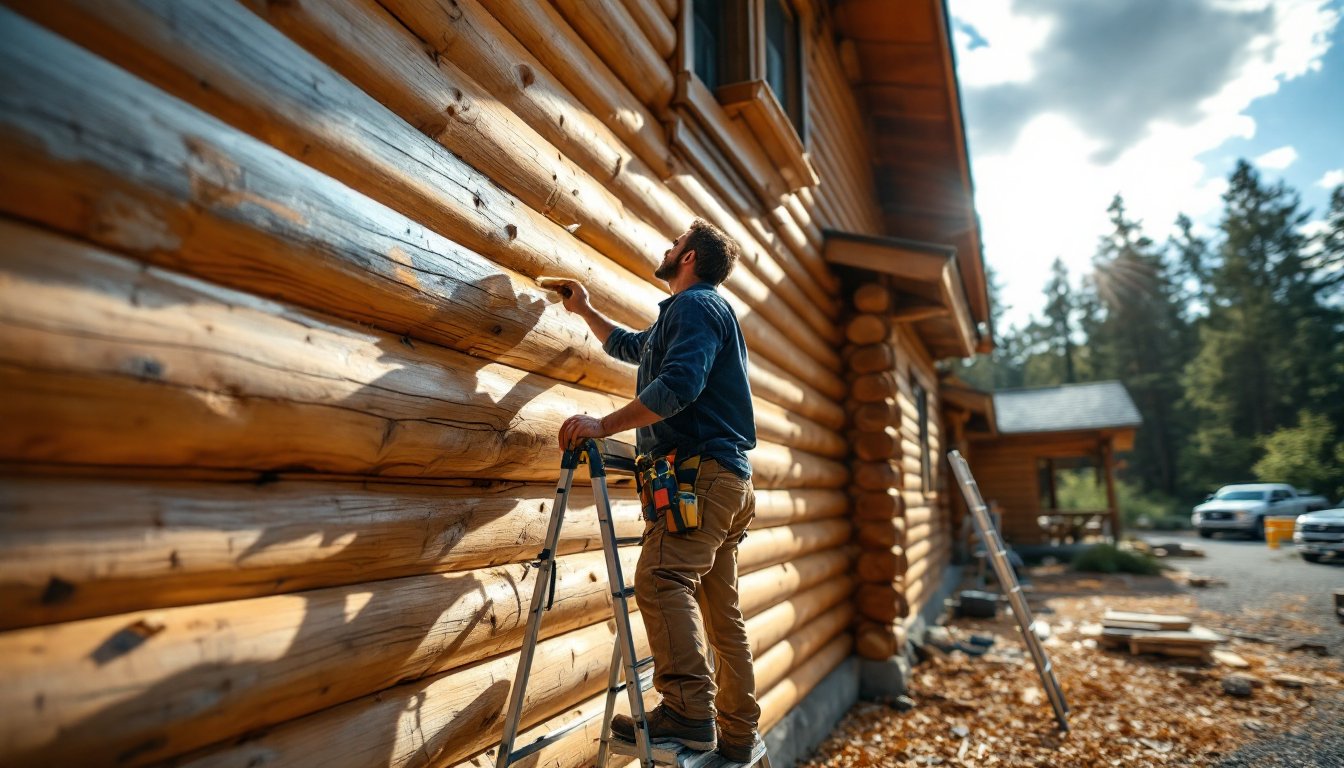
Annual cleaning is the foundation. Use a pump sprayer and a log home wash solution (or a mix of oxygen bleach, sodium percarbonate, and water). Avoid chlorine bleach: it damages lignin. Scrub with a soft-bristle brush, rinse thoroughly, and let dry for 48–72 hours before applying finish.
Inspect chinking and caulking at least twice a year. Look for separation, cracking, or missing sections. Quality chinking flexes with the logs, but UV and movement eventually break it down. Remove failed material with a utility knife, clean the joint with denatured alcohol, apply backer rod (foam tube) to control depth, and gun in fresh chink. Smooth with a chinking iron or wet finger.
Spot staining extends the life of your finish. If UV has faded south- or west-facing walls, clean, brighten if necessary, and apply one or two coats of the same stain system. Coverage is typically 150–250 square feet per gallon for the first coat, more for subsequent coats.
Check roof overhangs and gutters. Overhangs of at least 24 inches protect logs from direct rain. Clean gutters prevent water from splashing back onto walls. For broader seasonal upkeep strategies, a winter home maintenance checklist can help coordinate log care with other winterizing tasks.
Borate treatments are DIY-friendly and critical in humid climates. Mix disodium octaborate tetrahydrate (DOT) with water per label instructions and spray or brush onto bare or lightly finished wood. Borates diffuse into the wood, deterring insects and inhibiting fungi. Reapply every few years or after stripping.
Safety note: Always wear nitrile gloves, safety glasses, and a respirator when working with chemical strippers, brighteners, or stains. Many log finishes and cleaners are low-VOC but still irritating. Work in good weather, applying stain in direct sun or temps below 50°F compromises adhesion.
When to Call a Professional vs. Do It Yourself
DIY works for routine cleaning, spot staining, and small chinking repairs. But some jobs are worth hiring out.
Full-home refinishing is labor-intensive. Stripping old finish, especially if it’s peeling or a film-forming type, requires media blasting (corn cob, walnut shell, or glass bead) or chemical strippers. Blasting is dusty, loud, and easy to overdo, too much pressure gouges soft wood. If you’ve never done it, rent equipment and practice on a hidden wall, or hire a pro.
Log replacement is structural work. If you have logs with deep rot, extensive checking, or insect galleries, removal and replacement require scribing, notching, and often crane or hoist access. This isn’t a YouTube-tutorial project. Hire a certified log builder or restoration specialist. Check whether your jurisdiction requires a building permit for structural log work, it usually does.
High or steep walls justify professional help. If you’re uncomfortable on a 24-foot extension ladder or need scaffolding to reach gable ends, the risk isn’t worth the savings. Pros have the gear and insurance.
Severe mold, mildew, or algae may need biocide treatments and professional-grade fungicides, especially if the contamination has spread to interior walls. Don’t assume surface scrubbing will solve it, hidden moisture and airflow issues often drive the problem.
Resources like Bob Vila and Family Handyman offer project guides that can help you assess your skill level and decide where to draw the line. When in doubt, get a quote. Many contractors will walk the property and give a free estimate, which doubles as an education in what your home actually needs.
Seasonal Log Home Maintenance Checklist
Spring (March–May)
- Inspect for winter damage: ice damming, snow load cracks, roof leaks
- Clean exterior walls with log wash: apply brightener if wood has grayed
- Check and repair chinking and caulk joints
- Inspect foundation vents and crawl space for moisture or pest intrusion
- Test gutters and downspouts: ensure water drains at least 6 feet from foundation
- Apply borate treatment to any bare wood or new repairs
Summer (June–August)
- Stain or seal logs if finish is thin or faded (ideal temps: 50–85°F, low humidity)
- Inspect deck, railings, and porch logs for splintering or rot
- Trim vegetation 12–18 inches away from walls to improve airflow and reduce moisture
- Check window and door caulking, gaps let conditioned air out and pests in
- Clean and inspect chimney and flashing if you have a wood stove
For general home maintenance tasks that overlap with log-specific care, summer is ideal for exterior work.
Fall (September–November)
- Final exterior inspection before cold weather
- Clean gutters and check that roof overhangs are intact
- Seal any gaps in chinking or caulk before freeze-thaw cycles begin
- Inspect attic vents and soffit for wasp nests or gaps
- Store firewood at least 20 feet from the house to deter insects
- Apply a seasonal maintenance checklist approach to coordinate interior and exterior tasks
Winter (December–February)
- Monitor for ice dams on roof edges: improve attic insulation and ventilation if they form
- Check interior humidity, aim for 30–50% to prevent condensation on logs and windows
- Inspect for rodent or insect activity in attic, basement, or around foundation
- After heavy snow, clear drifts from foundation walls to prevent melt infiltration
- Schedule any needed pro services (media blasting, log replacement) for spring
Many routine upkeep strategies can be adapted to the unique demands of log construction.
Conclusion
Log homes reward attention. A weekend spent cleaning and staining now saves thousands in restoration later. Know your limits, tackle what you can with confidence, and bring in a qualified log home specialist when the job calls for it. Keep a calendar, stock your shed with the right products, and your logs will look good and stay sound for generations.