Table of Contents
ToggleSmart thermostats promise lower utility bills, voice control from the couch, and schedules that adjust to your routine. But with upfront costs ranging from $130 to $300-plus, plus potential installation fees, homeowners want proof before pulling the trigger. The short answer: most households see a 10–15% reduction in heating and cooling costs, which translates to payback in 1–3 years. But real-world value depends on your current system, climate zone, and how often you forget to adjust a manual dial. This guide walks through energy savings, installation, and whether a smart thermostat makes sense for your home.
Key Takeaways
- A smart thermostat worth it for most households is proven by 10–15% annual energy savings that typically pay back the $130–$300 investment in 1–3 years.
- Smart thermostats eliminate manual adjustment errors and work with geofencing to automatically shift to eco mode when you leave, delivering savings beyond what programmable models can achieve.
- Installation is straightforward with a C-wire already present (20–30 minutes DIY), but running new wiring or hiring a professional adds $100–$200 to setup costs and complexity.
- Greatest value comes for households with inconsistent schedules, forgetful adjusters, multi-zone homes, or regions with extreme weather where HVAC systems run year-round.
- Skip a smart thermostat if you’re a renter, have a well-tuned programmable thermostat already in place, or your monthly heating/cooling bill is under $50, as payback may exceed three years.
- Check HVAC compatibility, verify your thermostat has a C-wire, and confirm Wi-Fi reliability before purchasing, as older systems and internet outages can limit functionality.
What Is a Smart Thermostat and How Does It Work?
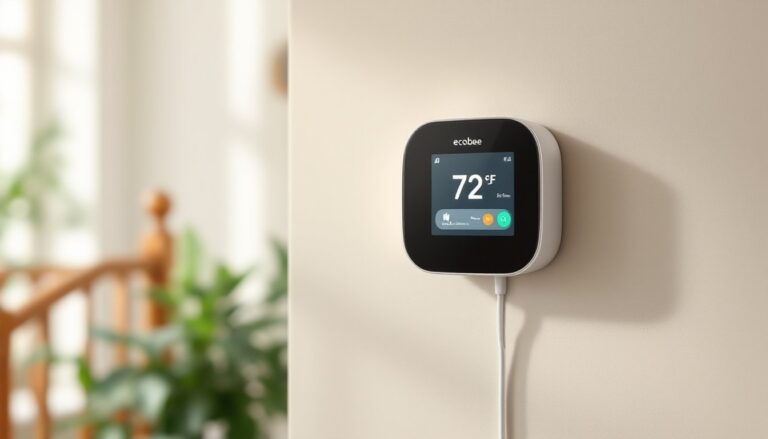
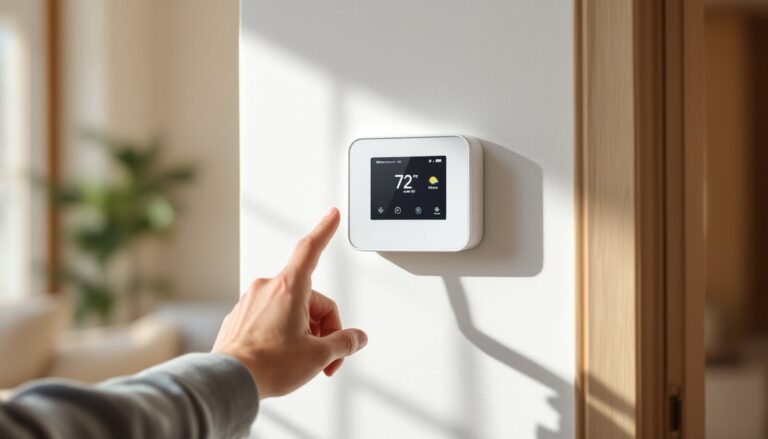
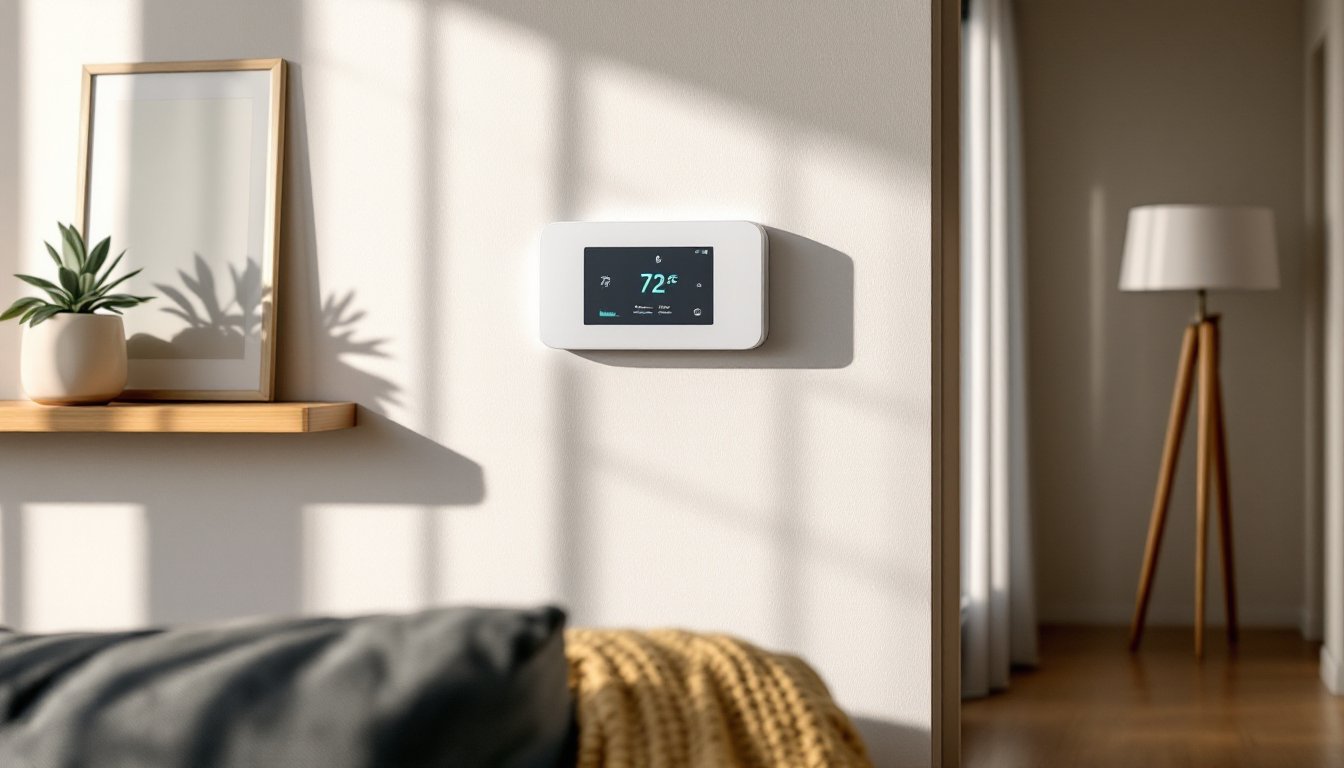
A smart thermostat replaces the standard wall-mounted dial or programmable model and connects to your home’s Wi-Fi network. It learns your schedule, monitors indoor and outdoor temps, and adjusts heating or cooling automatically. Most models feature touchscreen displays, smartphone app control, and voice integration with platforms like Alexa or Google Assistant.
Under the hood, they use occupancy sensors, geofencing (tracking your phone’s location), and weather data to optimize runtime. When you leave for work, the system can shift into eco mode: 30 minutes before you arrive home, it returns to your preferred temperature. Unlike programmable thermostats, which rely on rigid schedules you set once and forget, smart versions adapt week by week.
Compatibility matters. Smart thermostats work with most forced-air systems (gas, electric, heat pump) and many hydronic setups, but some older furnaces or multi-stage HVAC configurations require a common wire (C-wire) for continuous power. If your existing thermostat uses only two wires (R and W, for example), you may need to run a new 18/5 or 18/8 thermostat cable from the furnace, or use a plug-in adapter some manufacturers provide. Check your system’s wiring before buying.
The Real Cost Savings: Energy Bills and ROI
The U.S. Department of Energy estimates that homeowners can save roughly 10–15% per year on heating and cooling by using a programmable thermostat correctly. Smart models push that higher because they eliminate human error, no more forgetting to dial down before vacation or leaving the AC cranked all day.
Real savings depend on three variables: climate zone, existing thermostat type, and HVAC efficiency. A household in Chicago running an older gas furnace with a manual thermostat might see $180–$250 in annual savings: a home in Phoenix with a newer heat pump and a programmable model already in place might save $80–$120. If you currently adjust your thermostat manually and consistently, the jump to smart will be modest. If you leave it on 68°F all winter, you’ll see the biggest difference.
Payback period typically lands between 18 and 36 months. A $200 thermostat saving $150 per year pays for itself in 16 months. Factor in utility rebates, many power companies offer $25–$100 incentives for smart thermostat installations, and ROI improves. Some models also provide monthly energy reports and tips, which can nudge savings higher over time.
Keep in mind that pricing varies by region and energy rates. Natural gas costs fluctuate: electricity prices in the Northeast run double those in the Southeast. Run your own math using average monthly bills and local utility rates to forecast realistic payback.
Convenience and Smart Home Integration Benefits
Beyond the spreadsheet, smart thermostats deliver quality-of-life upgrades that manual or programmable models can’t match. Remote access tops the list: adjust temperature from a job site, hotel room, or the beach. If an unexpected cold snap hits while you’re away, you can prevent frozen pipes with a few taps. If you leave the AC running by mistake, you can shut it down remotely.
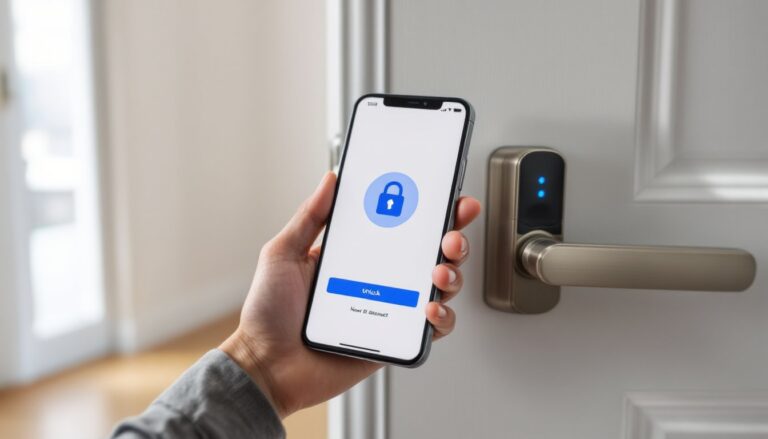
Voice control through Alexa, Google Assistant, or Siri means you can change settings hands-free while cooking, working, or wrangling kids. Whole-home automation is smoother when the thermostat talks to other devices, lights, locks, blinds, and security cameras. Some systems trigger “away” scenes: when the last person leaves and the smart lock engages, the thermostat shifts to eco mode and lights turn off.
Many units feature occupancy sensors that detect motion in the room and adjust accordingly. If everyone’s upstairs for the evening, the system can reduce output to unused zones (if you have a zoned HVAC setup). Integration with smart home technology extends to energy monitoring, too. Pairing a smart thermostat with a smart home hub allows centralized control and automation routines that maximize efficiency across devices.
Another underrated perk: maintenance alerts. Smart thermostats track runtime and remind you to change filters, schedule tune-ups, or check for airflow issues. Catching a clogged filter early can prevent a $400 repair bill and keep efficiency high.
Installation Considerations: DIY vs. Professional
If your home already has a C-wire (common wire, typically blue or black in a bundle of five or more thermostat wires), installation is straightforward. Turn off power at the breaker, label and disconnect the old thermostat wires, mount the new backplate with the included screws, reconnect wires to matching terminals (R, W, Y, G, C), snap on the thermostat body, and restore power. Most installs take 20–30 minutes and require only a screwdriver and smartphone for app setup.
Without a C-wire, you have three options:
- Run new thermostat cable from the furnace to the wall. This involves fishing 18/5 or 18/8 wire through walls or along basement joists. Doable for DIYers comfortable with fishing wire, but expect 1–2 hours if the run is clean, longer if you hit blocking or need to drill through studs.
- Use a plug-in adapter or power extender kit. Some manufacturers bundle these: they tap into existing wiring at the furnace to repurpose an unused wire as a C-wire. Works in many setups but isn’t universal, check compatibility.
- Hire an HVAC tech or electrician. Expect $100–$200 for labor. If your system is complex (multi-stage heat pump, dual fuel, or zoned), this is the safer route. Miswiring can damage control boards, and some furnace warranties require professional installation for add-ons.
Permit requirements: Installing a thermostat rarely requires a permit (it’s low-voltage, Class 2 wiring under NEC Article 725). But if you’re pulling new cable through walls, local codes may vary. Always verify with your jurisdiction if you’re opening walls or ceilings.
Bottom line: if your current thermostat has five or more wires and you’re comfortable with basic wiring, DIY saves $100+. If you see only red and white wires or you’re unsure, call a pro. A botched install can cost more than the labor you tried to avoid.
Who Benefits Most from a Smart Thermostat?
Smart thermostats deliver the most value to specific household profiles:
• Inconsistent schedules: If work hours, travel, or shift patterns change weekly, a learning thermostat adapts faster than you can reprogram a manual unit. Geofencing ensures the system adjusts as soon as you leave, without any button presses.
• Forgetful adjusters: Homeowners who forget to turn down heat before bed or leave AC running all day will see the biggest bill reductions. Automation removes the discipline requirement.
• Multi-zone or large homes: If you have a zoned HVAC system or a house over 2,500 square feet, smart thermostats with remote sensors can balance temperatures across floors and rooms, preventing hot or cold spots.
• Tech-forward households: If you already use voice assistants, smart locks, or automated lighting, a smart thermostat completes the ecosystem. Integration with smart home technology streamlines routines and boosts overall efficiency.
• Regions with extreme weather: Homes in climate zones with harsh winters or scorching summers run HVAC systems harder and longer. Even a 12% efficiency gain translates to meaningful dollar savings when you’re heating or cooling 180+ days per year.
Who might skip it? Renters with landlord-controlled HVAC, households with very simple heating (baseboard electric, wood stove primary), or anyone already maximizing savings with a well-tuned programmable thermostat and disciplined manual adjustments. If your monthly heating/cooling bill averages under $50, payback stretches beyond three years, at that point, convenience becomes the main selling point.
Potential Drawbacks and Limitations to Consider
Smart thermostats aren’t a universal win. Upfront cost is the most obvious hurdle: $130–$300 for the device, plus installation if you lack a C-wire. That’s 2–3× the price of a basic programmable model. If your HVAC system is nearing end-of-life (furnaces typically last 15–20 years, AC units 10–15), investing in a premium thermostat months before a system replacement may not make financial sense.
Compatibility issues trip up some buyers. Older systems, high-voltage baseboard heaters, and certain proprietary setups (like some Carrier or Lennox models with communicating protocols) won’t work with off-the-shelf smart thermostats. Always cross-reference your equipment model with the manufacturer’s compatibility checker before purchasing.
Wi-Fi dependency means that if your home network drops or your internet goes out, remote control vanishes. The thermostat still functions locally via touchscreen, but scheduling and app features go dark. Some models include cellular backup or offline modes, but not all.
Learning curve and privacy: Smart thermostats collect data, temperature preferences, occupancy patterns, usage history. Most manufacturers anonymize and aggregate this for product improvements, but if data privacy is a concern, read the fine print. Setup also requires app downloads, account creation, and sometimes firmware updates. Not every homeowner wants that friction.
Diminishing returns: If you already have a programmable thermostat and use it correctly, or if you live in a mild climate where HVAC runtime is minimal, the bump in savings may not justify the expense. Compare your current annual heating/cooling costs against realistic estimates from independent reviews to see if the math works.
Finally, aesthetic preferences: Some homeowners dislike the look of a glowing touchscreen on the wall, preferring a discrete dial or simple digital display. Style is subjective, but it’s worth considering if you’re particular about interior design.
Conclusion
For most homeowners with compatible HVAC systems and moderate-to-high energy bills, a smart thermostat pays for itself within two to three years while adding convenience and control. The biggest wins come from eliminating manual adjustment errors and automating temperature setbacks. If you’re already disciplined with a programmable model or your heating and cooling costs are minimal, the upgrade becomes more about comfort and smart home integration than pure ROI. Check your wiring, confirm compatibility, and run the numbers for your climate and usage, then decide if the investment fits your home improvement priorities.