Table of Contents
ToggleA home’s exterior isn’t just about curb appeal, it’s the first line of defense against weather, pests, and decay. Neglect it, and minor issues snowball into thousands of dollars in repairs. Stay on top of exterior house maintenance, though, and homeowners can extend the life of roofing, siding, and foundations while keeping energy bills in check. This guide walks through the essential tasks that protect the investment, from seasonal checklists to specific maintenance for roofs, siding, and landscaping. No fluff, just actionable steps that keep a house standing strong.
Key Takeaways
- Regular home exterior maintenance prevents water intrusion and structural damage while preserving property value by up to 50-70% at resale.
- Clean gutters and downspouts at least twice yearly and direct water at least 6 feet from the foundation to avoid foundation damage and decay.
- Inspect and repair caulk around windows and doors every 5-10 years, and replace damaged roofing, siding, or paint promptly to extend the life of exterior materials.
- Grade soil away from the foundation at a 1-inch-per-foot slope and keep shrubs 12-18 inches from the foundation to prevent moisture intrusion and root damage.
- Seal asphalt driveways every 2-3 years and apply water-repellent stain or sealer to wood decks every 2-3 years to resist freeze-thaw damage and decay.
- Divide exterior house maintenance into spring inspections, summer repairs, and fall weatherproofing to catch issues early and prevent costly emergency repairs.
Why Regular Home Exterior Maintenance Matters
Skipping exterior home maintenance is like ignoring the check engine light, it’ll catch up eventually, and the bill won’t be pretty. Regular upkeep prevents water intrusion, the root cause of most structural damage. A clogged gutter or cracked caulk lets moisture seep behind siding and into wall cavities, where it rots framing lumber and feeds mold.
Beyond preventing damage, consistent maintenance preserves property value. Peeling paint, sagging gutters, and overgrown shrubs signal neglect to buyers and appraisers. According to Bob Vila, even minor exterior updates can recoup 50-70% of their cost at resale.
There’s also the energy angle. Air leaks around windows, doors, and trim drive up heating and cooling costs. Sealing gaps and maintaining weatherstripping keeps conditioned air where it belongs. Finally, safety matters. Loose siding, damaged steps, and unstable railings create liability risks. A proactive approach to exterior house maintenance keeps both the home and its occupants secure.
Essential Seasonal Maintenance Tasks
Spring and Summer Maintenance Priorities
Spring is inspection season. Start with a walk-around to spot winter damage: cracked siding, loose shingles, or settled soil near the foundation. Look for ice dam damage on roof edges and eaves, water stains or lifted shingles are telltale signs.
Clean gutters and downspouts thoroughly. Remove leaves, twigs, and granule buildup from asphalt shingles. Flush downspouts with a hose to confirm drainage flows away from the foundation at least 6 feet. Homes with mature trees benefit from spring maintenance practices that include trimming overhanging branches before storm season.
Inspect and repair caulk around windows, doors, and trim. Most exterior-grade caulks last 5-10 years before cracking. Scrape out old, brittle caulk and apply fresh polyurethane or silicone-based sealant for flexibility. Wear work gloves and safety glasses when scraping.
Power wash siding, decks, and walkways to remove mildew and algae. Use a 1,500-2,500 PSI pressure washer with a 25- or 40-degree nozzle to avoid damaging wood or vinyl. For tougher stains, homeowners can apply cleaning solutions suited to various materials.
Check exterior paint for peeling or blistering. Scrape loose paint, sand smooth, prime bare wood with an oil-based primer, and apply two coats of acrylic latex topcoat. One gallon typically covers 300-400 square feet.
Fall and Winter Preparation Checklist
Fall tasks focus on weatherproofing and drainage. Clean gutters again after leaves drop, this is non-negotiable. Install gutter guards if cleaning twice a year feels excessive.
Inspect the roof for damaged, curled, or missing shingles. Replace as needed before winter weather arrives. If the roof is older than 20 years or shows widespread wear, budget for professional replacement. Asphalt shingles have a typical lifespan of 20-30 years.
Seal driveways and walkways. Asphalt driveways need coal tar or asphalt-based sealer every 2-3 years. Concrete benefits from a penetrating silane/siloxane sealer to resist freeze-thaw damage. Apply when temperatures are above 50°F and rain isn’t expected for 24 hours.
Disconnect and drain garden hoses. Shut off exterior hose bibs from inside if the home has isolation valves. In cold climates, insulate exposed pipes with foam pipe insulation or heat tape to prevent freezing.
Trim trees and shrubs away from the house. Branches should clear siding and the roof by at least 2-3 feet to prevent abrasion and limit pest access. Homes in areas with heavy snowfall can review winter preparation steps to handle ice and cold.
Maintaining Your Roof, Gutters, and Drainage Systems
Roofs and drainage systems do the heavy lifting in exterior maintenance. Start with a twice-yearly roof inspection from the ground using binoculars, or carefully climb a ladder if comfortable. Look for missing or damaged shingles, exposed nails, and granule loss. Granules protect asphalt shingles from UV damage: excessive loss means the shingles are nearing end-of-life.
Check flashing around chimneys, vents, and skylights. Flashing prevents water from infiltrating roof penetrations. Rust, gaps, or lifted edges require immediate attention. Re-seal with roofing cement or replace damaged sections. If flashing work involves cutting or soldering, hire a roofer.
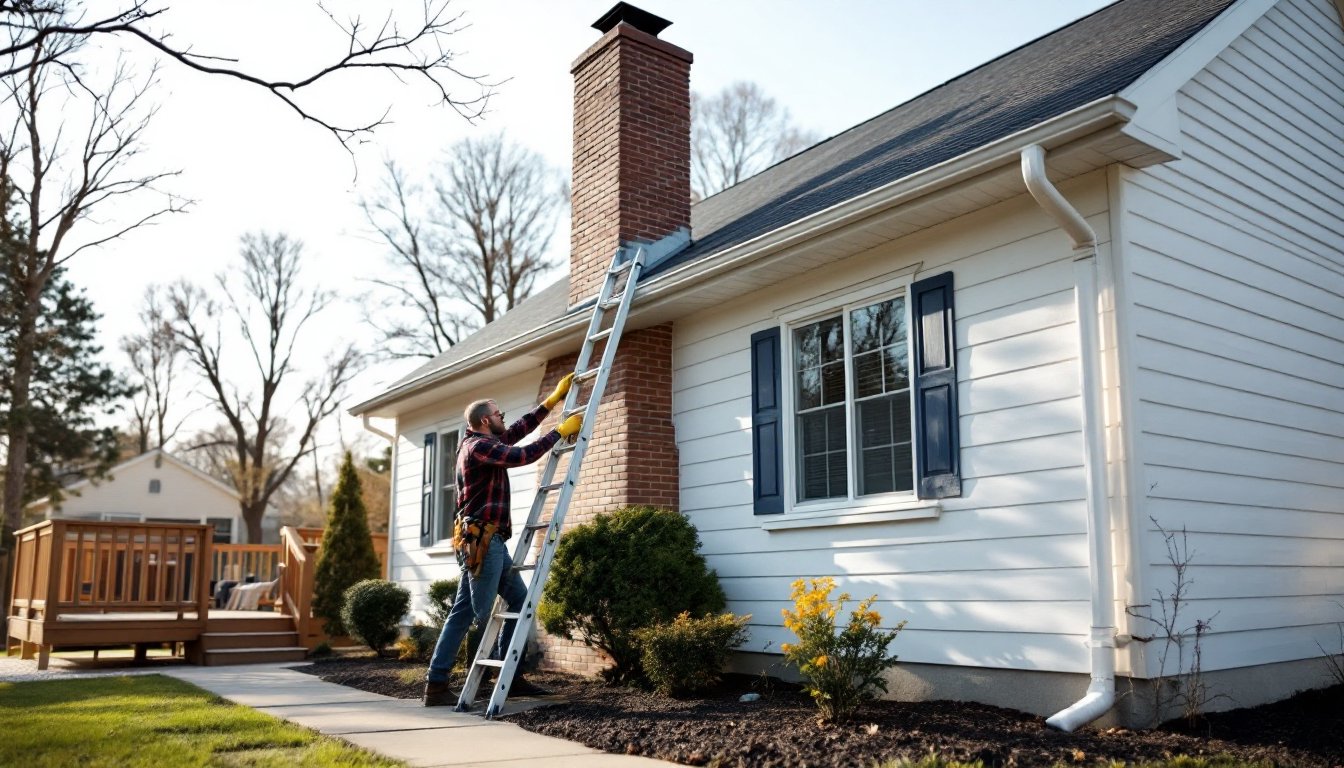
Gutters need cleaning at least twice a year, spring and fall. Use a sturdy extension ladder and work gloves. Scoop debris into a bucket, then flush gutters and downspouts with a hose. Check for leaks at seams and joints: seal with gutter sealant or replace sections if rust or holes are present.
Downspouts must direct water away from the foundation. Install downspout extensions or splash blocks to discharge water at least 6 feet from the house. In areas with poor drainage, consider a French drain or dry well to manage runoff.
Inspect soffit and fascia boards for rot or pest damage. These boards support gutters and close off rafter tails. Tap with a screwdriver, soft or spongy wood indicates rot. Replace damaged sections with pressure-treated or PVC trim boards to resist future decay. Wear a dust mask when cutting treated lumber.
Siding, Paint, and Exterior Surface Care
Siding materials vary, vinyl, wood, fiber cement, stucco, but all need regular checks. Walk the perimeter and look for cracks, warping, loose boards, or holes. Small cracks in vinyl siding can be patched with vinyl repair adhesive: larger damage requires board replacement.
Wood siding demands more attention. Inspect for rot, insect damage, and loose or missing caulk. Tap suspect boards with a screwdriver. If it sinks in easily, the wood’s compromised. Replace damaged boards promptly to prevent further decay. Use cedar, redwood, or pressure-treated pine as replacements.
Fiber cement siding is durable but not invincible. Check caulk joints and repaint every 10-15 years with 100% acrylic latex paint. Fiber cement requires pre-drilling for nails to avoid cracking, use a carbide-tipped bit.
Paint maintenance extends beyond aesthetics. Exterior paint protects wood from moisture and UV degradation. Scrape peeling paint, sand to bare wood if necessary, and prime with oil-based primer for maximum adhesion. Topcoat with two coats of acrylic latex exterior paint. High-quality paint (Sherwin-Williams Duration, Benjamin Moore Aura) costs more upfront but lasts 10-12 years versus 5-7 for budget brands.
For stucco, inspect for cracks larger than 1/8 inch. Small hairline cracks are cosmetic: wider cracks can allow water penetration. Fill with elastomeric stucco patch and seal with masonry primer and paint.
Power washing is effective for most siding but requires caution. Keep the nozzle 12-18 inches from the surface and angle downward to avoid forcing water behind siding. Vinyl and aluminum can handle higher pressure: wood siding needs a gentler touch to prevent splintering. Resources like Family Handyman offer detailed tutorials on cleaning techniques for different materials.
Landscaping and Foundation Maintenance
Landscaping isn’t just decorative, it directly impacts foundation health. Grade soil away from the house at a slope of 1 inch per foot for at least 6 feet. This prevents water from pooling against the foundation, which can cause settling, cracks, and basement leaks.
Inspect the foundation for cracks twice a year. Hairline cracks (less than 1/8 inch) are normal in poured concrete and usually cosmetic. Wider cracks, especially horizontal or stair-step patterns in block foundations, signal structural issues. Consult a structural engineer before attempting repairs.
Keep shrubs and plants at least 12-18 inches from the foundation. Roots can exploit small cracks and expand them over time. Trim branches that touch siding to prevent moisture retention and pest highways.
Mulch beds should sit 2-3 inches below siding to prevent moisture wicking and rot. Use hardwood mulch or stone instead of cypress or pine bark, which decompose faster. Refresh mulch annually to maintain depth and appearance.
Check exterior stairs, railings, and decks for stability. Deck boards, joists, and posts are subject to rot, especially where they contact the ground. Probe with a screwdriver and replace any soft lumber. Railings must be secure, building codes typically require railings to withstand 200 pounds of lateral force. Tighten loose fasteners and reinforce wobbly posts.
For homes with wood decks, apply a water-repellent stain or sealer every 2-3 years. Clean the deck first with a deck cleaner (oxalic acid-based for tannin stains), let dry, then apply sealer with a pump sprayer or brush. Wear gloves and eye protection, deck cleaners are caustic.
Sprinkler systems should be adjusted to avoid spraying siding and foundations. Constant moisture accelerates rot and invites pests. Drip irrigation or soaker hoses are better for foundation plantings. A comprehensive yearly maintenance checklist can help homeowners track these tasks alongside interior responsibilities.
Finally, inspect driveways and walkways for settling or cracking. Control joints (intentional grooves in concrete) should be sealed with polyurethane or self-leveling concrete caulk to prevent water infiltration and freeze-thaw damage. Asphalt driveways develop cracks over time: fill with rubberized asphalt crack filler before sealing.
Staying ahead of exterior house maintenance isn’t glamorous, but it’s the difference between a home that lasts decades and one that demands constant emergency repairs. A disciplined approach to year-round upkeep saves money, preserves value, and keeps the structure sound. Most tasks are DIY-friendly with basic tools and a free afternoon. For structural concerns or high-altitude work, call a licensed pro. The investment pays off in fewer surprises and a home that stands the test of time.