Table of Contents
ToggleInstalling a smart thermostat isn’t just about voice commands and app control, it’s about cutting heating and cooling costs while making your home genuinely more comfortable. The ecobee line delivers both, and unlike most competitors, it includes built-in voice assistance without requiring a separate smart speaker. If you’re tired of walking into a freezing bedroom or paying to heat rooms nobody’s using, ecobee’s room sensor system addresses that directly. This guide walks through what sets ecobee apart, how to install one yourself (it’s easier than running new electrical), and which model fits different home layouts and budgets.
Key Takeaways
- Ecobee smart thermostat with voice control includes built-in Alexa, eliminating the need for a separate smart speaker and enabling full smart home integration.
- The SmartSensor ecosystem monitors temperature and occupancy across multiple rooms, allowing the thermostat to prioritize occupied spaces and reduce energy waste in unused areas.
- DIY installation is straightforward for most homeowners; the thermostat requires a C-wire or the included Power Extender Kit, taking 30-60 minutes depending on your HVAC configuration.
- Users typically save $150-$300 annually on heating and cooling costs through adaptive scheduling, geofencing, and room-based comfort management.
- Three models fit different budgets: the Premium ($249-$279) with air quality monitoring, the Enhanced ($189-$219) with one sensor and Alexa, and the lite ($129-$159) without voice control.
- SmartSensor batteries last 3-5 years, and the app integrates with HomeKit, Google Assistant, IFTTT, and Home Assistant for comprehensive home automation.
What Makes the Ecobee Smart Thermostat Stand Out?
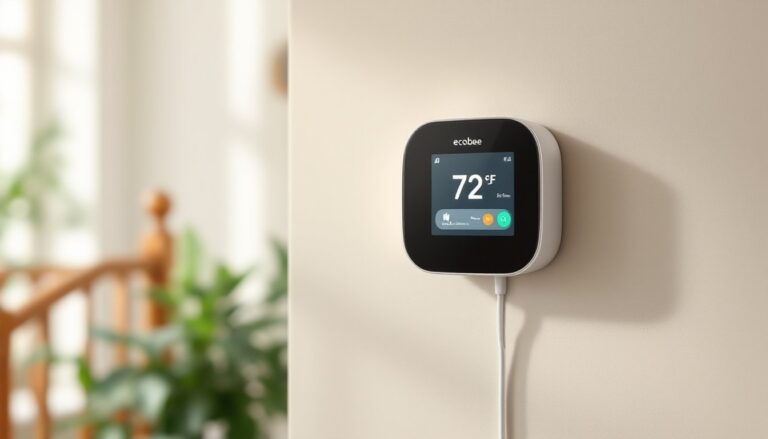
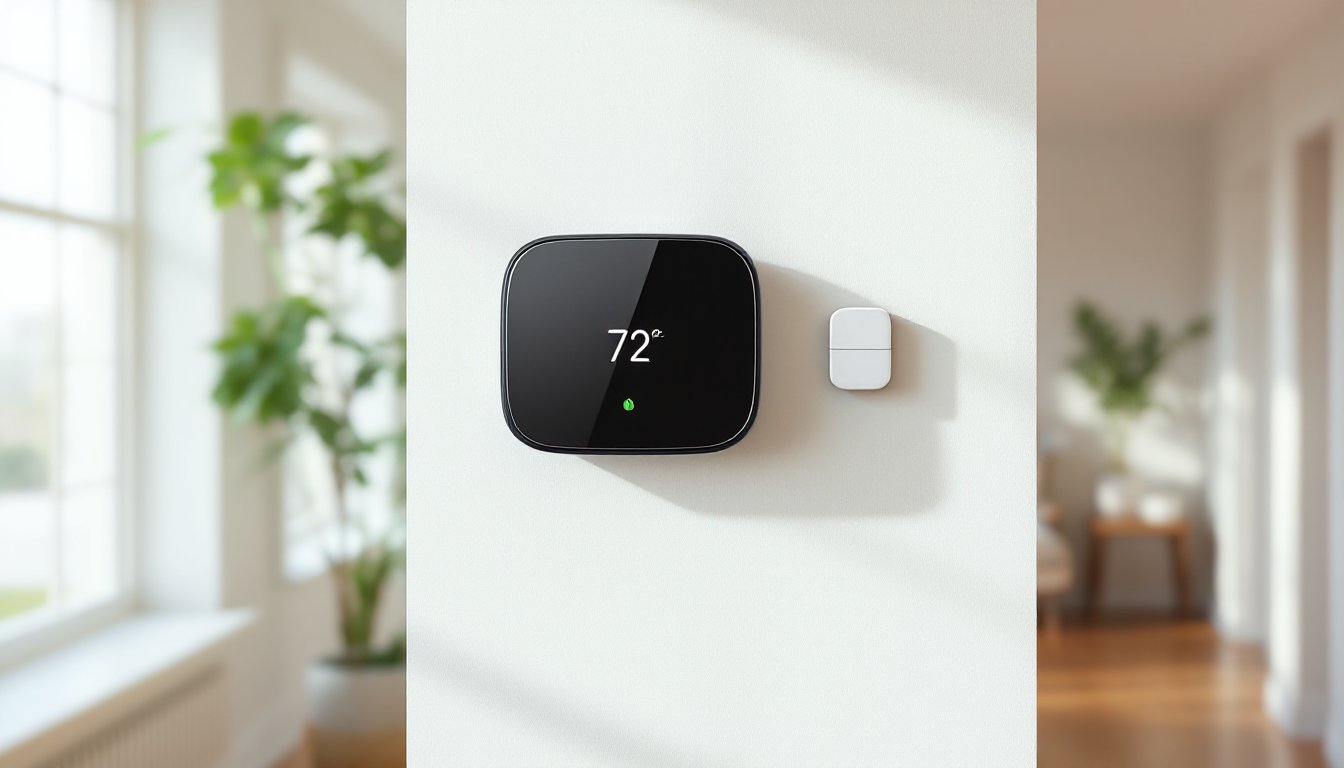
Ecobee thermostats pack more functionality into the wall unit than most competitors. You get occupancy sensing, temperature monitoring, and humidity tracking right out of the box, plus compatibility with most 24V HVAC systems (including heat pumps, multi-stage systems, and dual-fuel setups). The color touchscreen is responsive and readable from across the room, which matters when you’re adjusting settings with wet hands after a shower.
The real differentiator is the SmartSensor ecosystem. Unlike single-point thermostats that only read temperature at one wall location (usually a hallway), ecobee uses wireless room sensors to monitor conditions across multiple rooms. The system averages temperatures and prioritizes occupied spaces, so you’re not cooling an empty living room while your home office bakes in afternoon sun. Each sensor also detects motion, feeding into the thermostat’s occupancy algorithms.
Ecobee’s scheduling goes beyond basic programming. It learns your patterns and adjusts automatically, but unlike some “learning” thermostats, it lets you override and customize without fighting the algorithm. The geofencing feature uses your phone’s location to switch between Home and Away modes, though you’ll want to fine-tune the radius, default settings sometimes trigger too early.
Built-In Alexa and Voice Control Features
Most ecobee models (specifically the SmartThermostat Premium and standard SmartThermostat) include Amazon Alexa built directly into the device. This isn’t just voice control for temperature, it’s a full Alexa endpoint. You can ask it about weather, set timers while cooking, play music through the integrated speaker, or control other smart home devices without pulling out your phone.
The far-field microphone array picks up voice commands from across the room, even with HVAC noise running. Voice control works for temperature adjustments (“Alexa, set temperature to 68 degrees”), mode changes (“Alexa, switch to heat”), and comfort settings tied to specific sensors (“Alexa, make the bedroom comfortable”). For homes already in the Alexa ecosystem, this eliminates the need for a separate Echo device in that zone.
If you’re not an Alexa household, ecobee also integrates with Google Assistant, Apple HomeKit (including Siri), and Samsung SmartThings. The HomeKit integration is particularly solid for iOS users, allowing temperature control through the Home app and Siri shortcuts without third-party workarounds.
Installing Your Ecobee Thermostat: A DIY-Friendly Process
Ecobee installation is straightforward for most DIYers, but you need to verify C-wire (common wire) availability before ordering. The C-wire provides continuous 24V power, which smart thermostats need. If your existing thermostat has five or more wires and one connects to a terminal labeled C, you’re set. If not, ecobee includes a Power Extender Kit (PEK) that pulls power from your furnace control board, installation adds about 20 minutes and requires accessing your furnace.
Safety first: Turn off power to your HVAC system at the breaker before touching any wiring. Thermostats are low voltage (24V), but you’re working near line voltage (120V) inside the furnace when installing the PEK. Wear safety glasses and keep a headlamp handy if your furnace is in a dim basement or crawlspace.
Step-by-step installation:
- Document existing wiring. Take a photo of your old thermostat’s wire connections before removing anything. Label each wire with the included stickers (R, W, Y, G, C, etc.).
- Remove the old thermostat. Most pull straight off a wall plate after removing a decorative cover. Disconnect wires carefully, they can slip back into the wall if you’re not holding them.
- Install the PEK if needed. At your furnace, remove the access panel to expose the control board. Connect the PEK according to ecobee’s wiring diagram (it replaces or supplements existing thermostat wiring). Route the thermostat cable back to the wall location.
- Mount the ecobee backplate. Use the included anchors and screws. Check level, the screen will look crooked if the backplate is tilted. If your wall has a large hole from an old thermostat, ecobee sells trim plates, or you can use a generic wall plate extender.
- Connect wires to terminals. Match your labels to the ecobee terminal block. Connections are screw terminals, strip about 5/16″ of insulation, insert the wire fully, and tighten until snug (don’t overtighten and break the wire).
- Attach the thermostat and restore power. The ecobee snaps onto the backplate. Flip the breaker back on and follow the on-screen setup.
The ecobee app walks through HVAC configuration (system type, number of stages, fan settings). Answer honestly, incorrect settings can short-cycle your equipment or leave you without heat. If you’re unsure about your system type (single-stage vs. two-stage heat, for example), check your furnace’s data plate or consult the manual.
Permits: Thermostat replacement typically doesn’t require a permit since you’re not altering the HVAC system itself. But, if you’re installing HVAC equipment for the first time or moving refrigerant lines, you’ll need a licensed HVAC contractor and permits. When in doubt, check with your local building department.
Energy Savings and Smart Home Integration Benefits
Ecobee claims up to 26% annual savings on heating and cooling costs, based on internal studies comparing smart scheduling to constantly running systems. Real-world results vary, if you’re replacing a well-programmed programmable thermostat, savings will be modest. If you’re upgrading from a manual thermostat that runs 24/7, you’ll see significant drops in energy bills.
The savings come from three main features: adaptive scheduling (learning when you’re home), geofencing (detecting when everyone leaves), and sensor-based comfort management (not heating or cooling unused rooms). In a typical 2,000-square-foot home with a two-zone system, users report savings of $150-$300 annually in moderate climates. Homes in extreme climates (Phoenix summers, Minnesota winters) see larger dollar savings but similar percentage reductions.
Ecobee’s Home IQ energy reports break down runtime by equipment type (heating, cooling, fan, humidifier) and compare usage month-over-month. This helps identify issues, if your heat pump’s auxiliary heat is running constantly, for example, you might have a refrigerant leak or defrost control problem that needs professional attention.
Smart home integration extends beyond voice control. Ecobee works with IFTTT, Hubitat, Home Assistant, and most major platforms. You can build automations like “if indoor humidity exceeds 60%, turn on bathroom exhaust fan” or “if outdoor temperature drops below freezing, switch to home mode even if geofencing says away.” For homes with solar panels, you can tie HVAC operation to peak generation hours, precooling the house when solar production is high and grid demand is low.
Many smart thermostats now appear among top-rated home climate control systems for their ability to integrate with broader energy management strategies. Ecobee’s HomeIQ Utility Reports also help qualify for rebates, many utilities offer $50-$100 back for installing an ENERGY STAR certified smart thermostat, and ecobee models all carry that certification.
Room Sensors and Multi-Room Comfort Management
Ecobee’s SmartSensor system is the strongest argument for choosing this brand over competitors. Each battery-powered sensor (about the size of a matchbox) monitors temperature and occupancy, communicating wirelessly with the main thermostat. Place sensors in bedrooms, home offices, basements, anywhere that tends to run hotter or colder than the rest of the house.
The thermostat uses sensor data to calculate an averaged target temperature based on which rooms are occupied. During the day, if you’re working in a home office, ecobee prioritizes that room’s temperature and ignores the empty bedrooms. At night, it shifts focus to occupied bedrooms. You can also manually set “Comfort Settings” (Home, Away, Sleep) that prioritize specific sensors regardless of occupancy.
Sensor placement tips:
- Mount sensors 4-6 feet off the floor on interior walls, away from direct sunlight, vents, and exterior walls.
- Avoid placing sensors near windows, lamps, or electronics that generate heat.
- In bedrooms, mount sensors across from the bed, ecobee’s motion sensitivity is tuned for sleeping occupants, but it works best with a clear line of sight.
- Each sensor has a range of about 60 feet through standard residential walls. Thick stone or metal studs can reduce range.
Sensors run on CR2032 coin batteries (same as car key fobs), lasting 3-5 years under normal use. The ecobee app alerts you when batteries run low, and replacement takes about 10 seconds.
For multi-story homes or spaces with poor airflow, sensors won’t fix fundamental HVAC design problems. If your second floor is always 10 degrees warmer than the first floor, you likely need zone dampers, a second HVAC unit, or ductwork balancing, sensor-based averaging helps, but it can’t overcome physics. Review the best thermostat options for complex layouts if you’re dealing with major temperature imbalances.
Which Ecobee Model Is Right for Your Home?
Ecobee currently offers three main models: the SmartThermostat Premium, the SmartThermostat Enhanced, and the ecobee3 lite. Choosing between them depends on whether you need built-in voice control, how many sensors you’ll use, and budget.
SmartThermostat Premium ($249-$279) includes built-in Alexa, a SmartSensor, air quality monitoring (for VOCs, CO2, and humidity), and a more powerful speaker for whole-room audio. It also supports Alexa Built-in for two-way calling and Drop-In features, essentially functioning as an Echo Show without the screen. This model makes sense if the thermostat location is central (kitchen, hallway) and you want a smart speaker there anyway. The air quality monitoring is useful for homes with tight envelopes or recirculated air, it’ll remind you to change filters or increase ventilation when readings spike.
SmartThermostat Enhanced ($189-$219) is the middle option. It has Alexa voice control and includes one SmartSensor, but drops the air quality monitoring and has a less robust speaker. For most homeowners, this hits the sweet spot, you get multi-room comfort management and voice control without paying for features you might not use.
ecobee3 lite ($129-$159) is the budget model. No built-in voice control, no included sensor, but full smart scheduling, geofencing, and app control. You can add SmartSensors separately ($79 for a two-pack). This works well if you already have an Echo or Google Home nearby, or if you simply don’t care about voice control. The feature set is nearly identical to the Enhanced model for routine thermostat functions.
All models support the same number of SmartSensors (up to 32), though most homes use 2-4. All include the PEK for C-wire workarounds, and all support the same HVAC configurations (up to two stages of heating and cooling, heat pump with aux heat, dehumidifiers, HRVs, and ventilators).
Compatibility check: Before buying, use ecobee’s online compatibility checker or the in-app wizard. You’ll need to know your HVAC system type and current wiring. Most systems work, but older millivolt systems (common in some gas fireplaces and floor heaters), high-voltage baseboard heaters, and proprietary systems (like some Carrier units) aren’t compatible. When comparing across the market, ecobee frequently appears in professional reviews of climate control systems due to its broad compatibility.
Conclusion
Ecobee’s combination of room sensors, genuine voice control, and DIY-friendly installation makes it one of the strongest options for homeowners ready to upgrade from basic thermostats. The sensor system solves real comfort problems that single-point thermostats can’t address, and the energy reports give you the data needed to troubleshoot HVAC performance. Installation is manageable for most DIYers with basic electrical comfort, though the PEK setup adds a step if you’re missing a C-wire. Choose your model based on whether built-in Alexa and air quality monitoring justify the price jump, for many homes, the Enhanced model delivers everything needed without extra cost.